



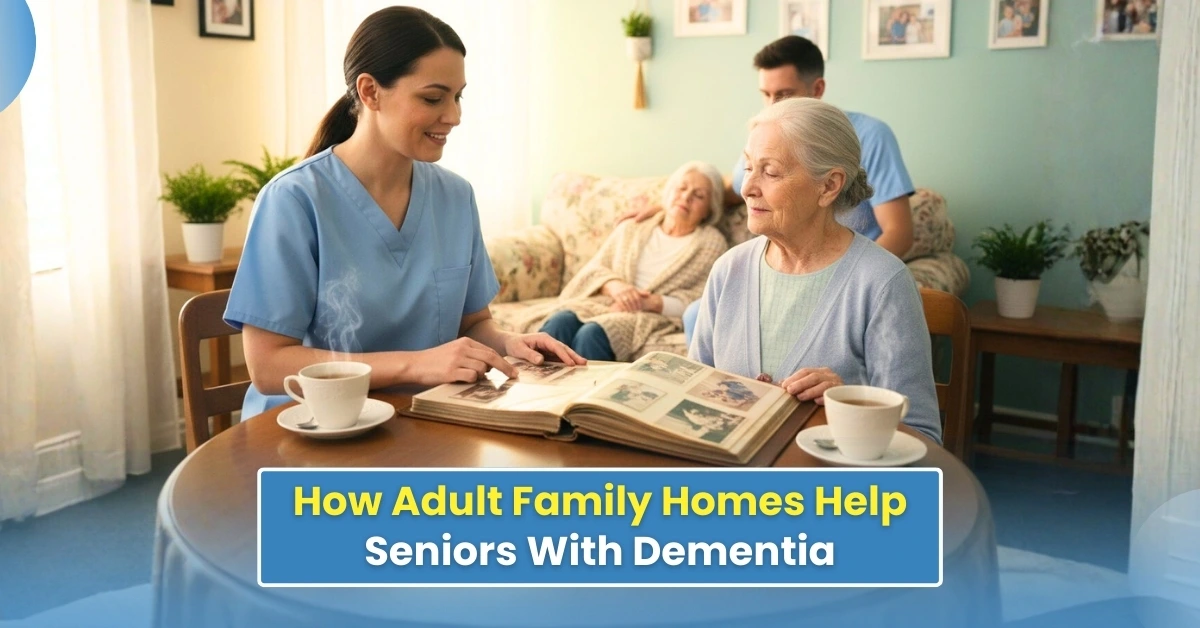
An adult family home for dementia care is great for individuals living with this condition. Dementia is a memory-related disorder that affects behavior and daily life functions. As a family, you may struggle to manage your loved one 24/7 because of work and other responsibilities, and this situation often creates insecurity and guilt for family members.
In this situation, you may want to balance caregiving and your daily responsibilities. An adult family home offers personalized assistance for seniors. It is a small home for dementia patients that provides all kinds of care, including personal care, meals, nutrition, and emotional support.
Hence, if you want specialized care for your loved one with dementia, consider an adult family home. There are more options available for dementia care; however, an adult family home provides a more home-like setting and experience for your loved one.
What Is an Adult Family Home?
An adult family home is a small residential facility for adults with dementia or other conditions that require personalized care. It is a small, homelike setting for 2–6 residents, where licensed caregivers provide meals, personal care assistance, and housekeeping. However, it differs from large assisted living facilities, which usually accommodate many residents and provide more staff and group activities.
Therefore, a dementia assisted living home is a safe and cost-effective option for families who need short-term or long-term care for their loved one. In these homes, caregivers provide 24/7 personal care and supervision and help residents take medications on time and eat healthy meals.
Understanding Dementia and Its Daily Challenges
Dementia is a broad term for memory-related disorders that affect daily life, from forgetting things to unusual behavior. This condition mostly affects older adults, where cognitive abilities decline due to brain damage. As a result, their memory, reasoning, language, and behavior are affected. It is not a normal part of aging, but it can make daily living very challenging. These are some common challenges people with dementia face:
- Memory loss, such as frequently forgetting names and events.
- Difficulty in maintaining personal care, such as bathing, dressing, and planning.
- Forgetting to eat meals and difficulty with swallowing.
- Inability to understand others’ words and communicate with them.
- May feel agitated, frustrated, and depressed due to forgetting things.
- Increased risk of falls and accidents.
Signs a Senior May Need Dementia Care Support
Dementia support for the elderly becomes important when they can’t manage their basic tasks at home. Early stages of dementia may seem normal due to aging; however, it may worsen with time, causing unusual behavior in your family members and increasing safety risks. Here are the common signs that your senior needs dementia care support:
- Frequently wandering away from home and getting lost in familiar places.
- Forgetting names, places, dates, and appointments.
- They may show aggression or anxiety.
- They are unable to manage finances, pay bills, or take medicines on time.
- Your family member is skipping baths and neglecting grooming.
- They forget to eat or can’t prepare meals.
Services Offered in Adult Family Homes for Dementia Care
Dementia assisted living homes offer a range of services, from personal care to nutritious meals. These service homes have highly professional, licensed caregiving staff who offer 24/7 service and supervision. These are the common services provided by AFH:
- Caregivers plan structured memory care routines using music, stories, and games to stimulate cognition.
- Caregivers are available 24/7 to provide support with bathing, toileting, grooming, and dressing.
- Caregivers provide regular health checkups and doctor consultations for residents.
- Caregivers also provide behavioral support for anxiety, depression, and aggression.
- The home layout is designed to prevent falls and improve safety.
- Caregivers provide a balanced diet to support residents’ physical health.
- Caregivers encourage dementia patients to participate in recreational activities such as music and art therapy.
Benefits of a Smaller Home Setting for Dementia Patients
Dementia care for seniors is very beneficial for their overall well-being. The home-like environment helps residents live comfortably without frustration. They receive help with personal hygiene, meals, cleaning, and daily errands. However, they also receive other benefits from the licensed caregiving staff in the AFH.
Less Anxiety and Overstimulation
Usually, noisy environments irritate dementia patients, who may feel overstimulated. It may create anxiety, which can only be relieved in a quiet place. Adult family homes offer that quiet space for these individuals who are constantly suffering.
Personalized Care
Seniors with dementia have specific needs according to their condition. For instance, some patients may need assistance with bathing, eating, and grooming, while others may need assistance with walking and communicating. Specialized caregivers identify their challenges and provide care based on their needs.
Safety and Familiar Surroundings
Adult family homes are safe for the elderly, as there are sufficient caregivers who are available 24/7 to provide assistance. They constantly check if any residents need them. Additionally, the small, cozy place feels familiar to them, making them comfortable.
More Independence
Dementia patients deal with daily challenges and often find themselves relying on their families for basic things. Adult family homes provide a safe environment where residents can take part in daily activities under supervision. They have the backing of caregivers who guide them and protect them from falls and other mishaps.
Better Social Interaction
As only 2-6 residents stay in the AFH, they feel like a family. They all experience the same problem, which is why they all feel empathetic to each other. It breaks the communication barrier, allowing them to interact and share their stories and opinions.
Better Quality of Life
When residents get assistance with basic living tasks, their quality of life increases. They may feel more comfortable and engaged in daily activities. They also participate in social activities, which further stimulate their cognition and work like natural medicine.
How to Choose the Right Adult Family Home
Choosing the right adult family home is an important decision that will affect your loved one. Therefore, take your time and research licensed AFHs that provide dementia care. You may have a list of suitable options. So, here is how you can choose the right one for seniors.
Check Staff Qualifications
You can contact them for a general inquiry and ask if their caregivers are licensed. Also, ask how many caregivers are in their home. Moreover, confirm their qualifications and experience. It’s important to ensure your loved one’s safety.
Check Safety and Cleanliness
Visit the adult family home, and check if it feels safe and is clean. A clean environment reflects safety and proper care. On the other hand, a cluttered environment will increase the risk of falls and mishaps for people with mobility issues.
24/7 Medical and Emergency Care
It’s very important to confirm whether they provide 24/7 medical care and emergency services. Ask them if they handle medical emergencies and provide nursing support. Health issues may occur anytime; hence, don’t neglect them.
Social and Emotional Environment
Observe how calming and warm the AFH environment is. See how residents are treating each other and communicating with each other. A socially warm environment is best for patients with dementia.
Location and Accessibility
Here comes the final part: choosing a suitable location. You obviously want to choose a nearby location. You’re absolutely right here. An easily accessible location is safer for your family members. You can visit the home whenever required or in case of an emergency.
Clear Costs and Contracts
Ask them for the total charges without hidden fees. Sometimes, we think the facility is cost-effective only after we realize there are hidden charges. Hence, ensure you have transparent information about the cost and the contract so you don’t regret it later.
Why Choose Loving Adult Family Home for Dementia Care
We at Loving Adult Family Home in Bothell, WA offer extensive care services for patients with dementia. We have licensed professional caregivers in our home with experience in dealing with dementia patients. They are well-trained for that and provide personalized care to each resident. Our caregivers provide help with daily grooming, eating, walking, and basic household tasks.
We provide nutritious meals to improve your family member’s physical health and ensure their safety and comfort. Overall, we ensure our residents feel at home. Our rooms and shared dining hall provide a comfortable living environment. If they want, they can eat with other residents or enjoy meals in their room.
We assist them if they need to go to a doctor’s appointment or a salon for daily grooming. We allow our residents to feel independent and prevent falls while walking or performing other household tasks. Moreover, we provide medical support and nursing care 24/7 in emergencies, so you can stay stress-free while we manage your loved ones’ care. Hence, if your senior family member is struggling with dementia, consider Loving Adult Family Home for dementia care.
FAQs
How Is an Adult Family Home Different From a Memory Care Facility?
An adult family home is a small, home-like setting with 2-6 residents with dementia. On the other hand, memory care facilities are larger communities for assisting individuals with Alzheimer’s and dementia. These facilities usually offer more structured programs for cognitive support.
Are Adult Family Homes Licensed and Regulated?
Yes, mostly adult family homes are licensed by the state or local authorities. It includes safety standards, caregiver qualifications, and facility inspections. Hence, you can verify their certification via government websites.
Can Family Members Visit Residents in Adult Family Homes?
Yes, adult family homes allow family members to visit whenever they want. It helps in maintaining relationships and residents’ comfort. Moreover, family members can monitor improvements in their loved one’s health.